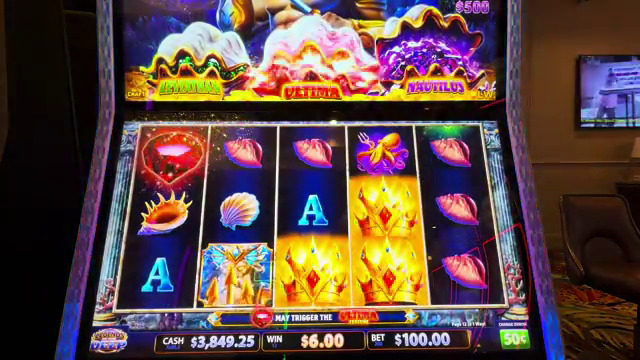
Offshore Online Casinos for Australian Players

Over the years, I’ve explored countless online gambling platforms, and I’ve found that offshore online casinos often offer experiences and opportunities that local Australian casinos cannot. Playing offshore opens access to exclusive games, larger bonuses, and advanced technology, making it possible to play smarter and maximize returns. Among all options, I focus on selecting the top australian online casinos, ensuring that my gaming remains secure, fair, and profitable.

Offshore casinos aren’t just about variety—they allow me to combine strategic play with bonus benefits, mobile accessibility, and high payout potential. In this guide, I’ll share exactly how I choose operators, manage risk, and optimize my experience in 2026.


Best E-wallets for Global Casino Players

I sit in the control room of a major online gambling operation, watching the lifeblood of our industry flow across the screens. That lifeblood is money. It moves in a ceaseless digital tide, flowing in from Tokyo, London, Toronto, and Rio, and flowing out just as quickly to winners across the globe. For the uninitiated, the mechanism of this movement might seem trivial. You click “deposit,” and the money appears. You click “withdraw,” and the money returns. But to us, the operators, the choice of payment method is the single most critical factor in the user experience chain. It defines your speed, your security, and ultimately, your satisfaction. While credit cards are declining due to regulatory pressure and bank blocks, and cryptocurrencies are rising but still daunting for some, the Digital Wallet-or E-wallet-remains the undisputed king of efficiency. Finding the right payment for gambling is not just about convenience; it is about strategy. It is about separating your bankroll from your grocery money, ensuring privacy from prying bank managers, and demanding the instant liquidity that only a digital intermediary can provide.

In this comprehensive guide, I am going to take you behind the curtain. I will dissect the major e-wallets from an insider’s perspective, analyzing their fees, their speed, their acceptance rates, and the subtle nuances that make one superior to another depending on where in the world you are sitting.

Understanding Open Banking in Online Casinos

For decades, the banking system has been a walled garden. Your financial data was locked inside the fortress of your bank, accessible only via slow, manual processes that felt like they were designed in the 1980s. As a representative of the iGaming industry, I can tell you that this friction has been our greatest headache. We build high-speed platforms, immersive live dealer studios, and complex algorithmic games, yet the gateway to playing them-the deposit-was often a stumbling block of declined cards, forgotten passwords, and three-day wire transfer delays. Then came the disruption. It is called Open Banking. It is not just a new payment method; it is a fundamental rewriting of how financial institutions talk to each other. In 2026, Open Banking is rapidly becoming the standard for online casinos across Europe, North America, and beyond. It is the technology that powers “Pay N Play,” enables instant withdrawals, and automates the tedious identity checks that players hate. In this deep dive, I will take you into the engine room of this financial revolution, explaining how it works, why it is safer than your credit card, and why it signals the end of the traditional casino account.

The Architecture of Trust: What is Open Banking?

To understand the innovation, you have to understand the legislation. In Europe, it started with PSD2 (Payment Services Directive 2). This law forced banks to open up their data. It mandated that if you, the customer, give permission, the bank must allow third-party providers (TPPs) to access your account information and initiate payments on your behalf.

The End of Credit Card Gambling? Current Laws

I sit in the operations center of our platform and watch the ticker of deposits scrolling by on the monitor. It is a mesmerizing waterfall of numbers, representing players from London to Sydney, from Toronto to New Jersey. Ten years ago, that ticker was dominated by two giants: Visa and Mastercard credit transactions. It was the golden age of liquidity, where a player could fund their account with a line of credit instantly, playing with money they promised to pay back later. Today, the composition of that ticker has changed fundamentally. The colors of the payment methods are different. We see more debit cards, more direct bank transfers, more e-wallets, and the rising tide of cryptocurrency. The era of credit card gambling is not just fading; in many of the world’s most lucrative jurisdictions, it has been legislated out of existence. As a representative of the industry, I have navigated these choppy regulatory waters firsthand. I have seen the panic in the boardrooms when the bans were announced, and I have seen the surprising resilience of the market in the aftermath. This article is my report from the trenches. I will detail exactly where credit card gambling is dead, where it is dying, and why this shift, painful as it was for our bottom line initially, might actually be the savior of the industry’s longevity.

The Philosophy of the Ban: Why Regulators Stepped In

To understand the laws, you must first understand the logic. For decades, the casino industry operated on a principle of “frictionless” payments. We wanted to make it as easy as possible for you to move money from your world to ours. Credit cards were the ultimate tool for this. They offered high limits and instant processing.

PayPal for Gambling: Pros and Cons in 2026

I have sat in boardrooms where the fate of millions of dollars in transaction volume was decided with a single signature on a partnership agreement. In the complex, regulated ecosystem of online gambling, the relationship between operators (us) and payment processors (them) is the lifeline of the business. Of all the logos you see in a casino footer-Visa, Skrill, Neteller, Bitcoin-none carries the immediate weight of consumer trust quite like PayPal. For over two decades, this blue double-P logo has been synonymous with safety. But the landscape of 2026 is vastly different from the early days of eBay auctions. PayPal has evolved into a financial super-app, and its integration with the iGaming sector has become deeper, faster, but also more restrictive in nuanced ways. As we dissect the reality of funding your account today, this PayPal casino guide 2026 edition aims to cut through the marketing noise. I will speak candidly about why we love PayPal as operators, why players flock to it, but also where the friction points lie for the high-roller and the privacy-conscious gambler.

The Evolution of the Partnership

To understand the pros and cons, you must understand the history. For years, PayPal was terrified of the gambling industry. In the early 2000s, they pulled out completely, fearing regulatory blowback from the US market. When they returned, they did so with extreme caution. They only work with “white-listed” jurisdictions.

Why Faster Withdrawals are the Top Priority for Players

I sit in weekly meetings where we analyze data that would make a statistician weep with joy. We track dwell time, bet sizing, session length, and the “churn rate,” which is the polite industry term for how many of you leave us and never come back. For years, the industry operated under a misconception. We thought that if we gave you more games, brighter graphics, and bigger bonuses, you would stay. We were wrong. The data is now irrefutable and screams a single truth: the speed at which we pay you is the primary determinant of your loyalty. In the fiercely competitive landscape of 2026, fast withdrawal casinos are not just a luxury option; they are the baseline expectation for any operator who wishes to survive. As a representative of the house, I am going to pull back the curtain on the financial engine of the online casino world. I will explain why we used to delay your payments, why we stopped, and why the speed of the transaction is the only metric that truly matters in building a relationship of trust.

The Psychology of Possession

To understand why speed matters, you have to understand the emotional arc of a gambling session. When you deposit money, you are selling a dream to yourself. You are buying excitement. The money leaves your bank account instantly, and you are fine with that because you are paying for the experience.

Copyright © 2026 . All rights reserved.